PUBLISHED
November 08, 2026
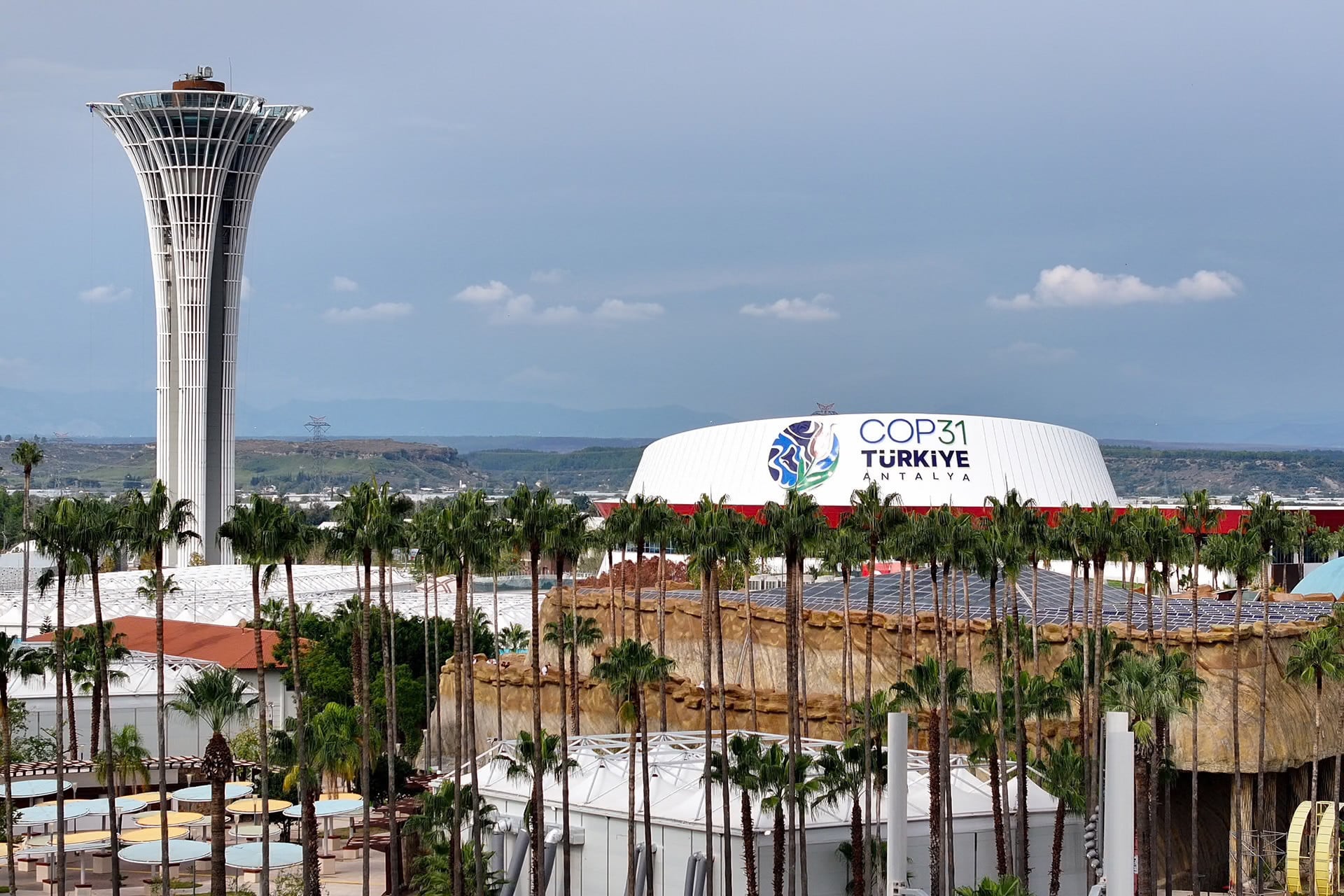
On Monday, the corridors of the Antalya Expo Centre will fill with the usual crowd of delegates in lanyards, top officials followed by aides and campaigners handing out briefing notes on the way into the venue. But more than three decades after the first Conference of the Parties, they will arrive to face a familiar problem, as countries can spend years negotiating an agreement only for one or a handful of governments to prevent its adoption.
The system is built around consensus, a principle meant to give every country a voice in decisions that affect the entire world. Without an agreed voting mechanism for moments when consensus breaks down, however, it has also given governments opposed to stronger climate action the power to block progress.
How the veto became embedded
The problem goes back to the negotiations surrounding the first Conference of the Parties (COP) in Berlin in 1995. The draft rules of procedure included a two-thirds majority as a last resort if consensus could not be reached. Saudi Arabia, Kuwait and other members of the Organisation of the Petroleum Exporting Countries (OPEC) opposed the proposal, arguing that substantive decisions should be taken only by consensus. The disagreement was never resolved, leaving the climate process without an agreed voting rule for substantive decisions.
Dr Joanna Depledge, a fellow at the Cambridge Centre for Environment, Energy and Natural Resource Governance, describes the episode as an “act of sabotage”. Having studied the history of the talks, she argues that the failure to adopt voting rules has had consequences far beyond the procedural dispute of the 1990s. “Whatever decision is taken can only be as strong as what the least ambitious nations are prepared to accept,” she says.
Depledge says the opposition unfolded across several sessions before and during the first COP. According to her account, US-based lobbyists with links to fossil-fuel interests, automobile companies and conservative political organisations advised the Saudi and Kuwaiti delegations. Rival proposals on financial decisions also ended in an impasse, and nearly three decades later the rules of procedure remain in draft.
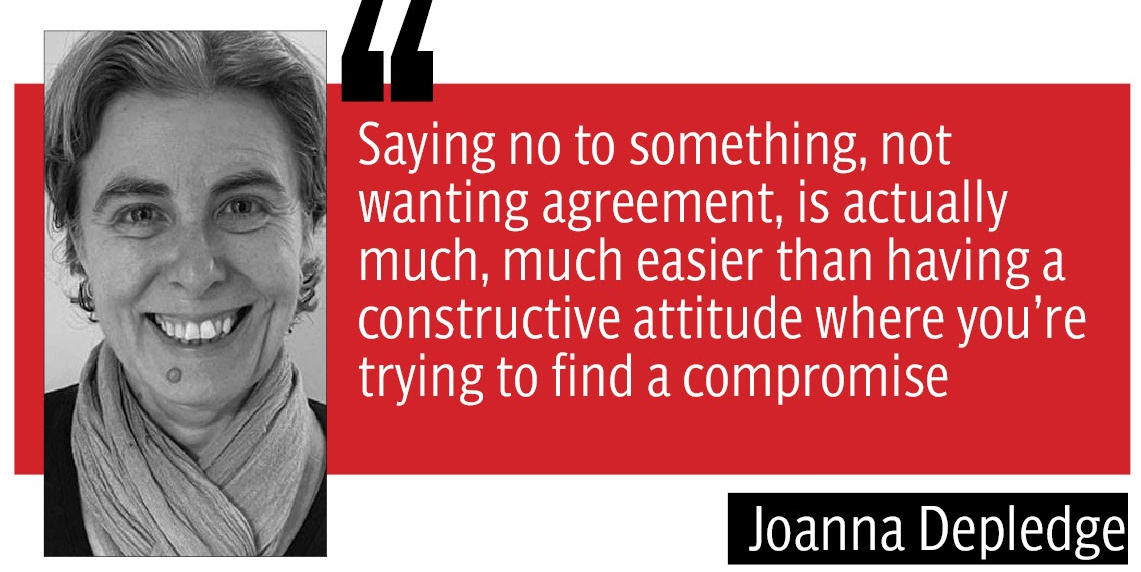
For countries opposed to voting rules, the strategy has been to prevent agreement rather than persuade others to accept their position. “Saying no to something, not wanting agreement, is actually much, much easier than having a constructive attitude where you’re trying to find a compromise,” Depledge says. She describes this as the “just say no” approach, which has taken different forms over the years, from delegations refusing proposals outright and delaying discussions to claiming they lack the time or instructions to engage.
Another part of the strategy has been to deepen mistrust between developed and developing countries, reinforcing a perception across much of the Global South that industrialised nations want to impose new obligations on others while failing to meet their own. Depledge has seen this more recently in the follow-up to the Global Stocktake and the COP28 commitments, where attempts to turn the language agreed in Dubai into concrete measures met resistance from Saudi Arabia and others.
The position is not confined to one government or even to countries whose economies depend heavily on fossil fuels. Depledge says petrostates have found support from larger emerging economies, particularly China and India, whose concerns about new mitigation commitments can bring them into alignment with the Arab Group. “If China and India were completely opposed to their position, the chances are that Saudi Arabia and others could not insist and could not obstruct,” she says. As she puts it, “It’s not just the petrostates. It’s a bigger group of emerging emitters who basically fear the imposition of any new rules or even expectations on them.” Their reasons may differ, but their positions can converge when negotiations turn to new commitments.
The case for consensus
Consensus has its defenders, and their argument is not simply about protecting the interests of oil-producing countries. Governments that have resisted voting reform, among them Saudi Arabia, the Arab Group and the Like-Minded Developing Countries, which include India and China, see consensus as a matter of sovereignty. Saudi Arabia has warned in submissions to the UN climate convention that decisions should not infringe on countries’ sovereignty or dictate their level of ambition. From that perspective, majority voting is not a neutral solution to gridlock but a way for one group of countries to impose decisions on others that have not agreed to them.
Alongside that runs an equity argument these blocs return to whenever they invoke common but differentiated responsibilities and the historical emissions of industrialised countries. Their concern is that a majority of developed countries could use such a system to change existing obligations, dilute the principle of differentiation between rich and poor countries, or impose new conditions on climate finance. They also argue that decisions adopted over a country’s formal objection are less likely to command support or be implemented, weakening the legitimacy of a process that is supposed to be driven by the parties themselves.
The counterargument, that a veto for the least ambitious is also a legitimacy problem, is real, but it is a clash between two ideas of legitimacy rather than a choice between legitimacy and obstruction. None of this makes Depledge’s critique wrong. It does mean the “consensus trap” is not only a story about petrostates exploiting a loophole. It is also a story about why much of the world has decided the alternative looks worse.
The cost of consensus
Beyond fossil fuels, the costs show up most clearly in aviation, which Depledge says stayed largely outside the climate regime for years because Saudi Arabia was “absolutely adamant there should be zero progress at all”, stalling the issue for two decades before the International Civil Aviation Organization made headway. Energy and fossil fuels were likewise absent from formal decisions until COP28, and even scientific assessments have struggled to make it into strong negotiated language despite warnings from bodies such as the World Meteorological Organization. The process can also be extraordinarily slow, with countries arguing over words, commas and the structure of tables long after the political and scientific questions are settled. Depledge believes technical decisions would be quicker if they could be taken by vote.
During final plenaries, the costs become visible when countries object to decisions adopted without them and presidents bring down the gavel. Such moments let negotiations conclude, but they raise questions about legitimacy, which Depledge calls “really messy”, warning that repeated procedural disputes erode confidence in the process. The Global Stocktake at COP28, adopted while small island developing states were out of the room, offered an example. For countries facing existential threats from rising seas, the legitimacy of the process is not a technical concern. Their ability to influence decisions that affect their survival is central to the point of climate diplomacy.
Was Dubai a breakthrough?
COP28 was widely seen as a turning point because its final agreement explicitly called for transitioning away from fossil fuels, placing the issue at the centre of a negotiated climate decision for the first time. Depledge accepts the agreement was significant but questions whether its importance was exaggerated. The wording, she says, was “a lot vaguer, a lot more ambiguous” than many accounts suggested, and more troubling was the inability of later COPs to build on it. She thinks the UAE’s role as host may have helped. “I think Dubai knew what arguments to make. They managed to maybe call in some favours.” But the failure to carry it forward leaves her doubting it was lasting. “It wasn’t quite so much of a breakthrough. It was more of a blip, a kind of quick pinnacle, but then down again.”
Who should host COPs
The argument over hosts has intensified as fossil-fuel producers take prominent roles. Depledge thinks excluding countries by production would be hard to apply consistently. “On the face of it, we would like to have COPs hosted by the climate-ambitious, the environmentally friendly,” she says. “But the problem with that is, how far do you take it?” Brazil is a major oil producer even as President Lula has made deforestation central to his agenda, the United Kingdom has quit coal power but still extracts oil, and Norway is seen as progressive while remaining a significant oil and gas producer. “It’s difficult to identify real saints in this space,” she says. The most committed countries are not always big or rich enough to host a summit this size, and excluding major producers could mean excluding states whose participation matters for any transition.
Consumption complicates the argument further, since importing countries keep buying Saudi oil and trading closely with other producers. “We still buy oil from Saudi Arabia. Is it them that are the villains, or is it us that are the villains?” Hosting can open public debate without changing policy, and Qatar’s COP18 did little to alter its direction. “Not in the slightest. Not a shred of change.” Presidencies can still set priorities, as Britain did with coal at COP26 and Chile with oceans, but they do not control the agenda, and their influence is “probably slightly less than one imagines”.
Can the rules be changed?
Despite the politics, Depledge sees a possible legal route. Papua New Guinea and Mexico proposed in 2011 to amend Articles 7 and 18 of the convention, using the amendment mechanism rather than the blocked procedural route. Under Article 15, an amendment is first adopted by consensus, but if efforts fail it can be adopted by three-quarters of parties present and voting, then accepted by three-quarters of all parties to enter into force. The proposal would have introduced three-quarters voting for most COP decisions, with exceptions, but it never gathered enough support. Depledge calls it a possible “legal workaround”, complicated if it binds some countries and not others, but it challenges the assumption that reform must win the consent of its opponents. “There are ways of doing it that would not necessarily require consensus,” she says.
Depledge has also argued for carefully designed voting rules, perhaps a seven-eighths super-majority or a majority among both developed and developing countries. Most governments would still prefer to reach agreement through negotiation, but the possibility of a vote would change the calculations of countries that now have little incentive to compromise. “If there were just one or two parties opposing something, and if it were possible to vote, that would make obstruction far less of a threat, because that threat would be empty,” she says.
Whether governments would pursue such a route is another matter. With climate slipping down the political agenda, and the United States withdrawing from the Paris Agreement and retreating from climate leadership within the UNFCCC, the prospects for fundamental reform are limited. Still, Depledge argues that countries wanting stronger action should be ready to challenge obstruction. Environmental groups and some governments have long been reluctant to criticise developing countries that resist stronger commitments, partly for fear of widening the North-South divide, and she says that reluctance should change. It matters, she argues, to name the countries that repeatedly prevent progress. “With these countries, we cannot assume good faith.” One hopeful sign is that ambitious countries are more willing to reject weak deals rather than accept diluted language, refusing to endorse inadequate decisions and returning the following year.
The co-presidency test
The divisions that have shaped climate negotiations for decades will be difficult to leave behind in Antalya, even with an unusual arrangement that splits responsibility for COP31 between Türkiye and Australia. Türkiye will hold the formal presidency, host the conference and oversee the Action Agenda, while Australia’s climate minister, Chris Bowen, will serve as President of Negotiations, with delegated authority to lead the talks, prepare texts and convene consultations. The two countries are required to consult and resolve any differences by agreement.
Both face questions about their climate credentials. Australia remains a major coal exporter, while Türkiye relies heavily on coal and has yet to set a timetable for phasing it out. While recognising the great strides made by Australia in rolling out solar power, “We seem to have completely forgotten that they’re a massive coal-exporting country,” Depledge says of Australia.
She is more optimistic about Türkiye’s position, given its links with both the Global North and South and its potential to broker agreements between governments that have struggled to find common ground. Depledge is also interested in whether the arrangement could offer a way for smaller countries to host and lead climate summits without having to shoulder the full financial and logistical burden. Her expectations for the negotiations themselves are less encouraging. On mitigation, she anticipates another attempt to put off difficult decisions and does not expect new language on fossil fuels. “That is going to be painful and difficult to watch happen.” Türkiye is pursuing an electrification target for committed countries to sign up to, which is a positive. “But it will be a big struggle to get it into a formal decision” cautions Depledge.
For Depledge, the immediate test may be less about a major new agreement than whether the two presidencies can keep the negotiations together. “There are no really big-ticket items here. It’s more a question of atmosphere,” she says. That atmosphere has become harder to hold together as relations between developed and developing countries have soured. Türkiye’s elevation of the Action Agenda, showcasing real world action on the ground, will no doubt be a bright spot. But overall, her hope is simply that Türkiye and Australia can keep the divisions from widening and stop governments from walking away from one another altogether.
This story was produced as part of the COP31 Climate Change Media Partnership, a fellowship for journalists covering the UN climate talks