.
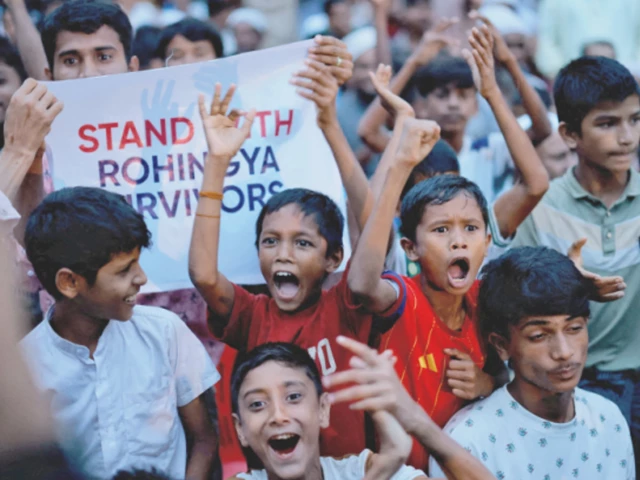
Rohingya refugee children react as the verdict is translated for the crowd gathered to watch the live announcement by the ICJ. PHOTO: REUTERS
HAGUE:
The International Court of Justice (ICJ) on Thursday found Myanmar responsible for genocide against its Rohingya Muslim minority, ruling that the country’s military and other state institutions had committed prohibited acts under the Genocide Convention in a landmark judgment against a state.
Delivering the ruling, ICJ President Yuji Iwasawa said Myanmar had also failed to prevent and punish genocide, detailing how its security forces carried out “extreme violence” against Rohingya communities in Rakhine state during military clearance operations, particularly in 2017.
The court found that Myanmar’s forces had intentionally committed acts including killing members of the group, causing serious bodily or mental harm and imposing measures intended to prevent births, all prohibited under Article II of the Genocide Convention.
The judgment followed examination of survivor testimonies, graphic evidence and reports by international investigators documenting the burning and destruction of villages, executions of men and boys, and rape and other sexual violence against women and girls. The court also heard evidence that nearly 400 villages, around 40% of those in three northern Rakhine townships, were partially or completely destroyed.
The 2017 military operations forced around 700,000 Rohingya to flee across the border into Bangladesh, triggering widespread international condemnation. The Gambia initiated the case in November 2019.
The ICJ ordered Myanmar to end any continuing violations, investigate and prosecute those reasonably suspected of involvement, and provide guarantees that such acts would not recur. It also directed the country to facilitate the safe, voluntary and dignified return of displaced Rohingya, reunite families and compensate the community for the harm suffered.
Myanmar must submit a report within two years detailing restitution measures and compensation arrangements. The court said the amount and modalities of compensation would be determined in a subsequent phase of proceedings.
UN Secretary-General Antonio Guterres welcomed the judgment as a “powerful recognition of the Rohingya victims of genocide”, saying accountability and an end to impunity were essential for reconciliation in Myanmar. The ruling is final, binding on the parties and cannot be appealed.