PUBLISHED
November 29, 2026
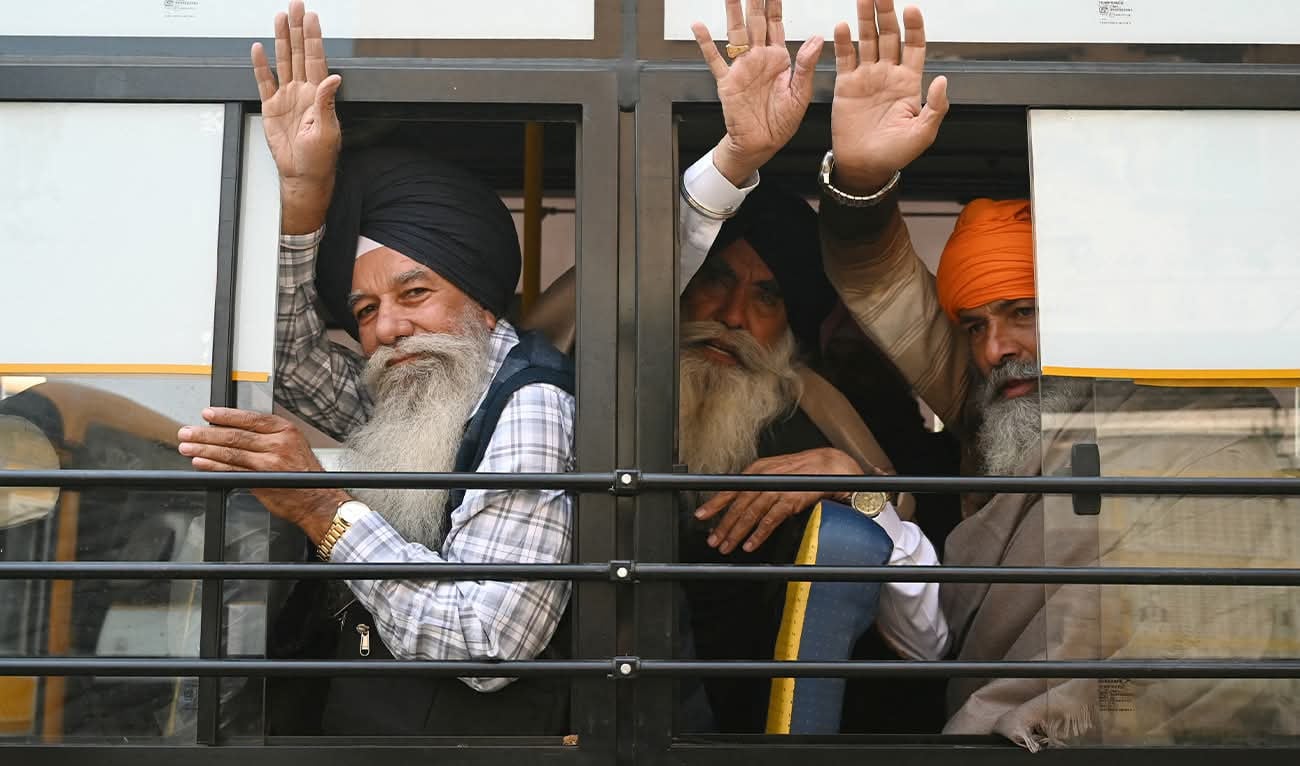
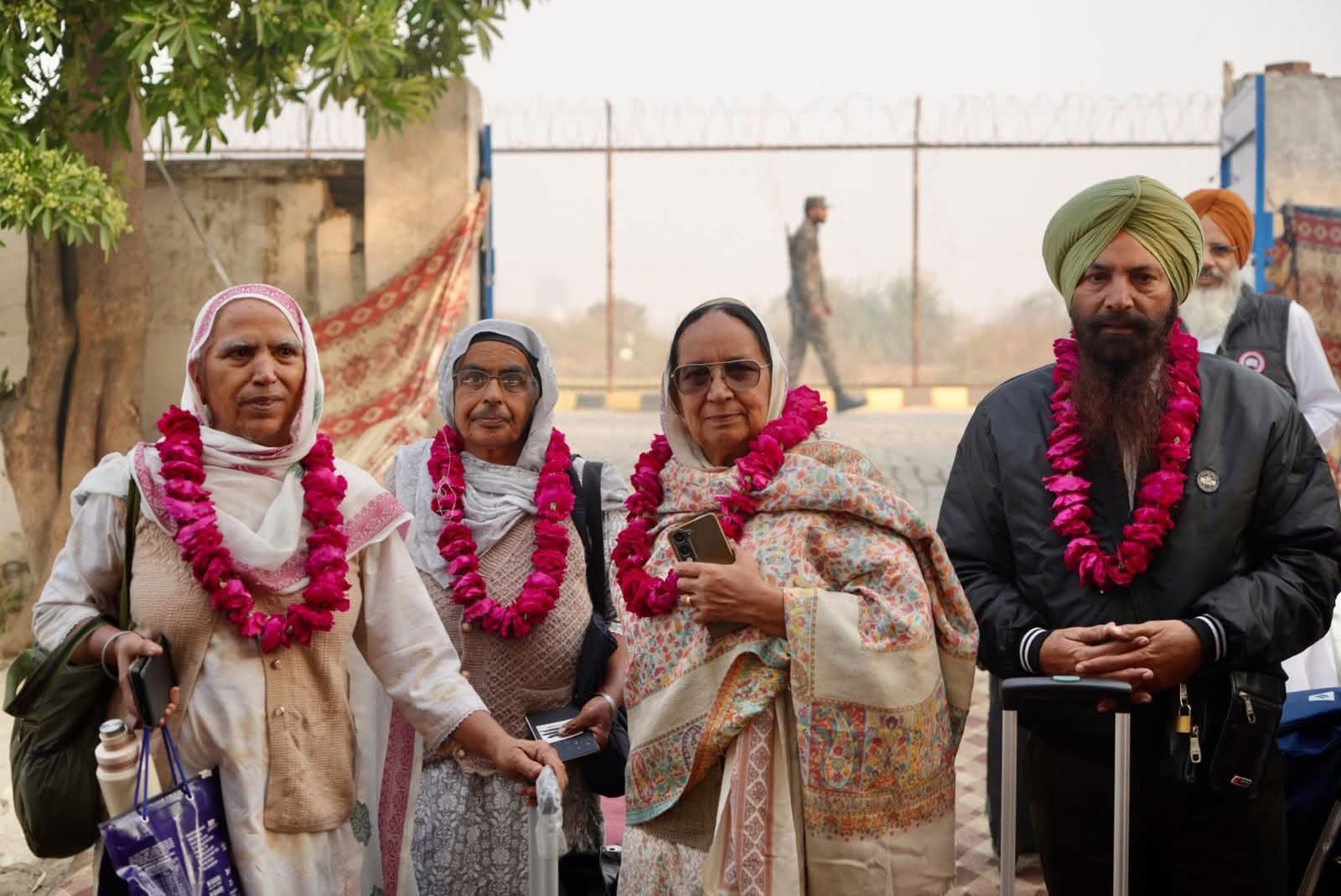
As the chants of “Waheguru Ji Ka Khalsa, Waheguru Ji Ki Fateh” echo across the Wagah border, Sikh pilgrims arriving from India step onto Pakistani soil. Their faces reflect mixed emotions, happiness and sadness at the same time. Some look at the ground with tearful eyes, while others repeatedly glance at the soil beneath their feet. Their thoughts drift to the homes, streets and neighbourhoods they have heard about from their parents and grandparents.
For the pilgrims visiting Pakistan to attend the 557th birth anniversary celebrations of Baba Guru Nanak, the journey is more than a religious pilgrimage. It is also an emotional return to ancestral land.
Among them are elderly people who were too young in 1947 to remember the events of Partition. Some were only a few months old when their families migrated to India. Yet their parents carried memories of their childhood, homes, farms, shops and villages in what is now Pakistan.
These memories were passed down through generations. Some grew up listening to stories about the famous kulfi of Multan, others heard about the markets of Lala Musa, while some were told by their grandmothers about family homes and neighbourhoods in Rawalpindi that they had never seen.
Now, when they visit Pakistan, many have one question: Can they be allowed to visit their ancestral village, home or street, even for a few hours, where their families once spent their lives?
A man who left his village at six months wants to see it again. The story of elderly pilgrim Mail Singh reflects the pain of separation caused by Partition. His father was named Jaimel Singh and his grandfather was Wadhawa Singh. His ancestral village was Padhiala, where he was also born.
Mail Singh says he was only six months old when Partition took place. He has no personal memories of leaving Pakistan, but his mother repeatedly told him stories about the land, their village and the people they had left behind. As he grew older, these stories created a strong desire to see his family’s ancestral home. The wish never faded. Instead, it grew stronger with time.
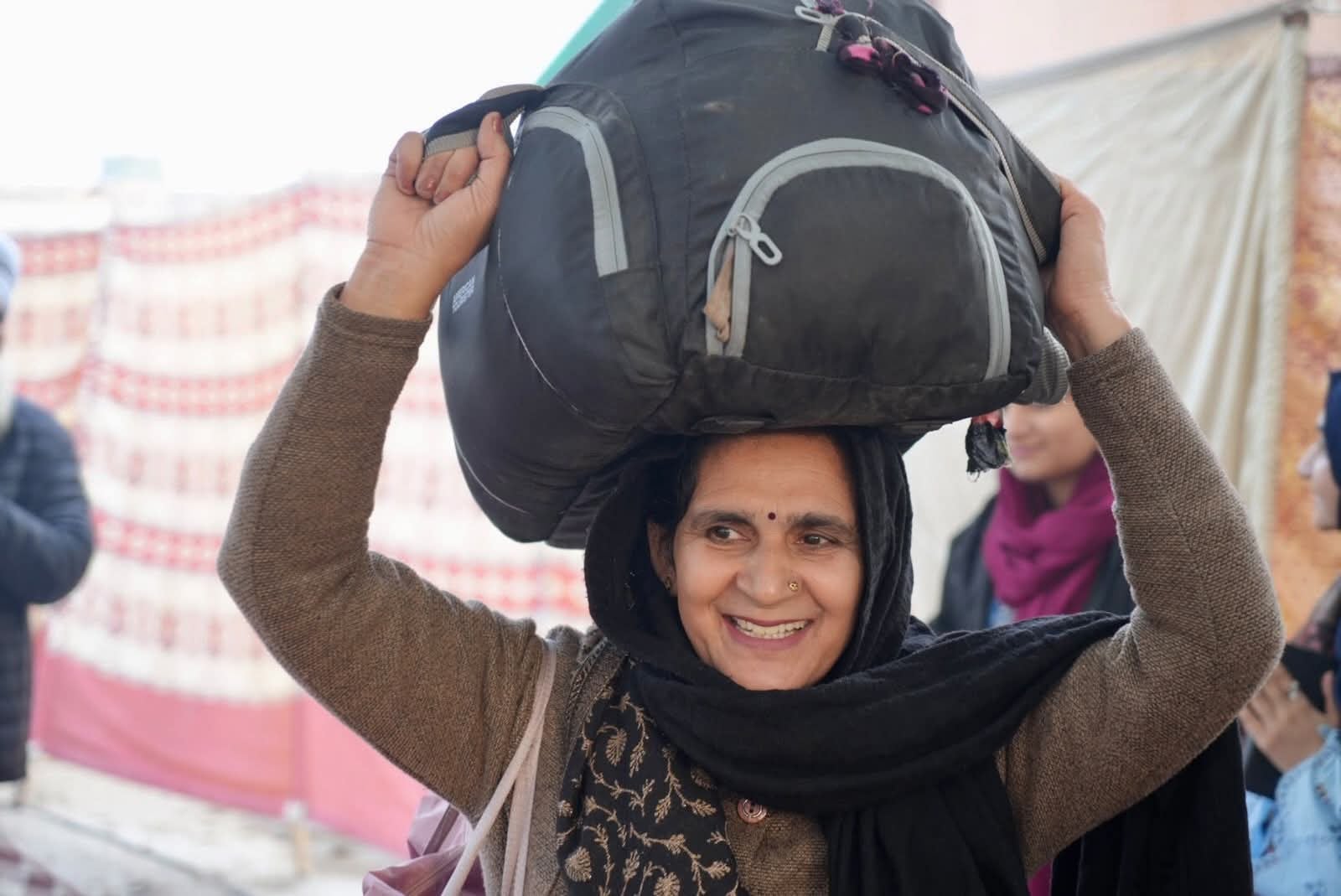 Visiting Pakistan for the first time, Mail Singh expresses his emotions by reciting a verse by Allama Iqbal:
“Phir uthi ik sada Tauheed ki Punjab se/ Hind ko aik mard-e-kamil ne jagaya khwab se.”
He hopes the Pakistani government or relevant authorities will allow him to visit his ancestral village for a few hours. He wants to see the land where his parents and grandparents lived, spend a few moments remembering them and touch the soil that connects him to his roots. For him, this visit would fulfil one of the greatest wishes of his life.
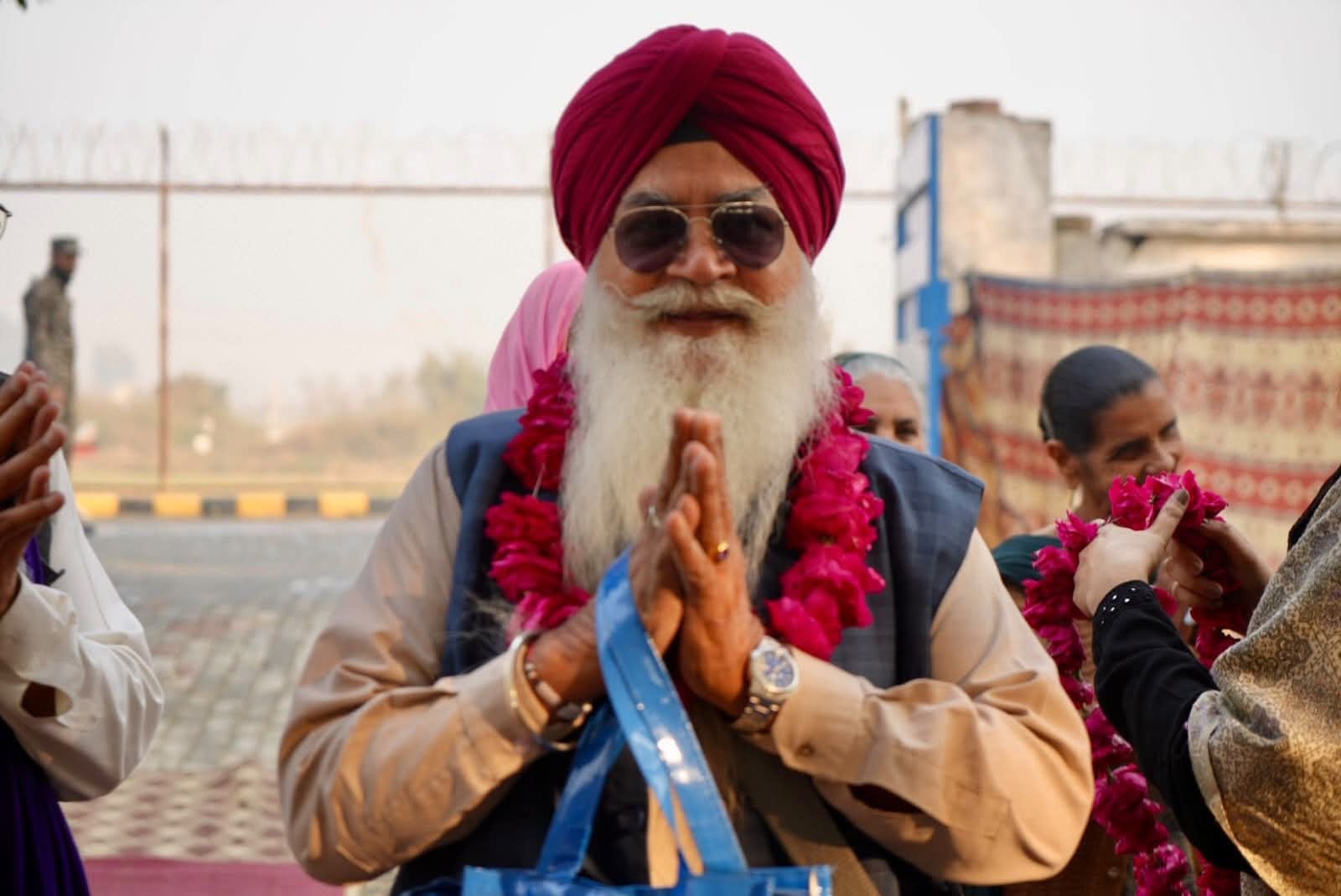
Like Mail Singh, Balbir Singh Bhalla, who has come to Pakistan for the third time from Delhi, also has a long-held wish.
He was born in Delhi, but his father and grandfather belonged to Barnali, near Lala Musa. Speaking about his experience in Pakistan, Balbir Singh says the atmosphere is welcoming and the people treat visitors with respect and affection. This is why he wants to visit Pakistan again and again.
However, one wish remains unfulfilled. He wants to visit Barnali and see the house where his ancestors once lived. For him, it would not simply be a visit to another place, but an opportunity to see his family’s history with his own eyes.
Memories, Multan’s kulfi and Montgomery
Women also make up a significant number of the pilgrims. Many carry memories of Pakistan passed down by their parents and grandparents. Amarjit Kaur, who has come to Pakistan from Delhi for the second time after 21 years, belongs to a family with roots in Pakistan. Her parents and grandparents were from Rawalpindi, while her mother-in-law belonged to Chakwal.
Describing her feelings after arriving in Pakistan, Kaur says she feels a strong sense of belonging. The affection and respect shown by local people remind her of her family’s past.
Kaur reveals that her father lived in Multan, where he owned a sweet shop. His homemade kulfi was famous in the area. Her mother belonged to Montgomery, now known as Sahiwal, while her maternal grandfather was involved in the horse trade.
Her parents are no longer alive. With tears in her eyes, Kaur says she grew up listening to stories about Multan and Montgomery. “If they were alive today, I could have told them that I have finally come to Pakistan to see the places they always talked about,” she says.
For Kaur, the most painful part is that she cannot visit the places where her parents once lived.
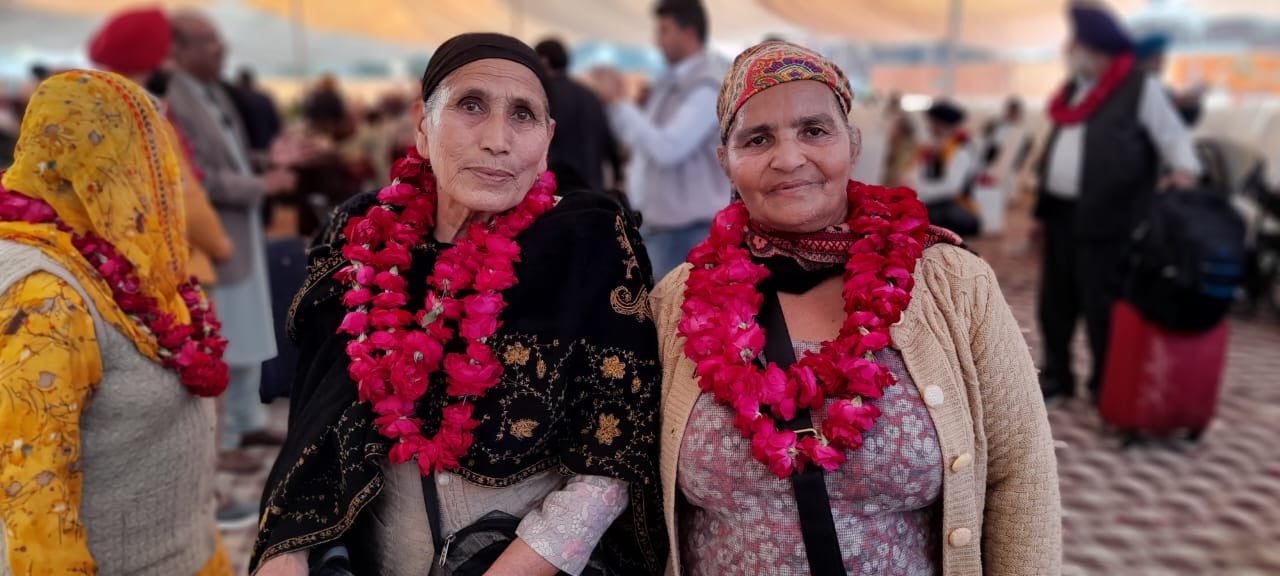
Elderly women whose families belonged to Kake Pind (Chaime) and Badurta Melo Wala have also arrived in Pakistan carrying memories of their ancestral villages. They say their mother was only four years old when the family migrated during Partition.
Now, they want to see the places where their elders were born, touch the soil and find out what has become of their ancestral homes and villages.
For these women, the journey is much more than a visit to religious or tourist sites. It is an attempt to reconnect with their family’s past. They have appealed to the Pakistani government to allow them to visit their ancestral areas, even if only for a few hours.
A generation looks back
The younger generation also wants to see its ancestral land. The group includes not only elderly pilgrims but also young people and newly married couples. For them, visiting Pakistan is both an expression of religious devotion and an opportunity to experience a country they have heard about.
Simran Deep, who is visiting Pakistan for the first time, says she had long wanted to see the land associated with the Sikh Gurus. She describes the opportunity to visit Pakistan as a source of happiness.
A newly married couple also attracted attention among the pilgrims. The husband is a Sikh and a vlogger, while his wife, Manu, belongs to a Hindu family. Manu says she also faced difficulties while applying for a visa. Reports of some pilgrims being denied entry visas at the border had made her anxious. However, receiving the visa brought her considerable relief and happiness.
Manu’s husband says some people had advised him that travelling to Pakistan could create difficulties in obtaining visas for the United Kingdom or Canada in the future.
However, he believes there is no reason for such concerns if travel documents are in order. He appreciates the hospitality and arrangements made for pilgrims in Pakistan. He says Manu’s long-standing wish to visit Sikh gurdwaras in Pakistan has finally come true.
Another young pilgrim says he became interested in visiting Pakistan after watching videos about the country on YouTube. He believes people on both sides of the border have affection for each other, but politics has kept them apart.
He says the hospitality he has experienced in Pakistan has strengthened his belief that people in the two countries share feelings of love and belonging.
Taking a piece of Pakistan
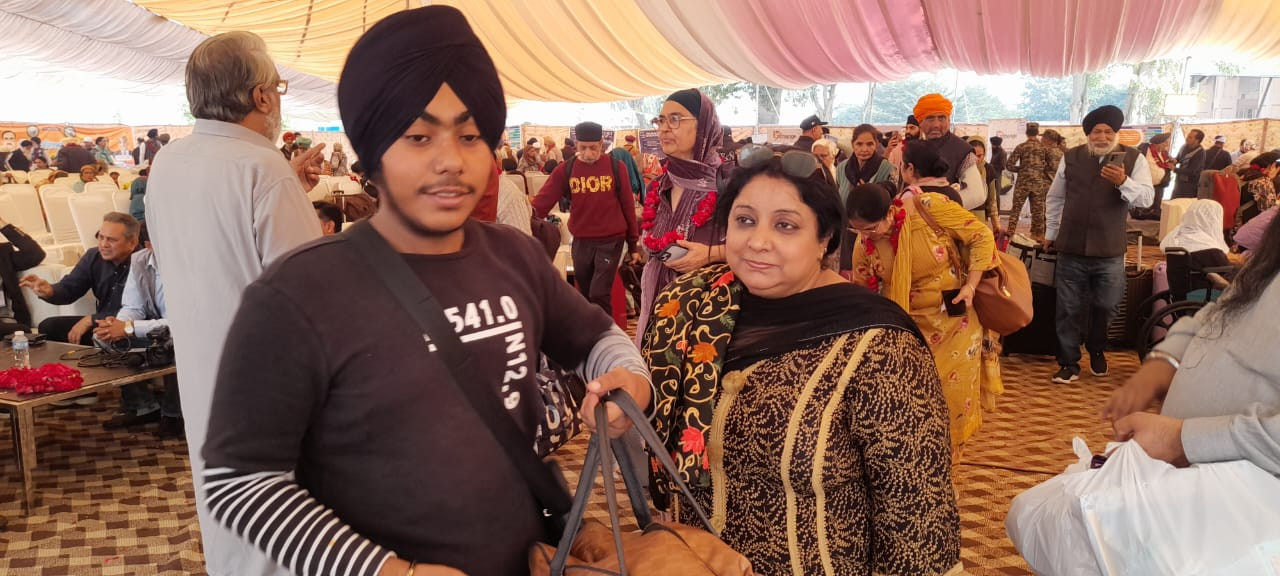
Alongside religious devotion and nostalgia, the journey also has a personal and family dimension. When asked what their families had requested them to bring back from Pakistan, one woman smiles and says her relatives want Pakistani suits and dupattas.
She says that although Amritsar and Delhi have large shopping markets, clothes and gifts brought directly from Pakistan have special value for her family. Another woman says her son has specifically asked her to bring back a traditional Pakistani kurta pajama.
These small requests reflect the shared culture and family connections that continue to exist across the border. Some pilgrims also express a desire to take home a little soil from Nankana Sahib and Kartarpur Sahib. For them, the soil is not simply a piece of land. It is a reminder of their journey and their connection with the birthplace of Guru Nanak Dev Ji.
Faith within boundaries
Despite these emotional connections, the pilgrims face restrictions because of the visa conditions and the rules governing religious visits between Pakistan and India. The two countries signed a formal agreement on September 14, 1974, to facilitate visits to religious sites. It is commonly known as the Protocol on Visits to Religious Shrines.
The main purpose of the agreement was to allow citizens of both countries to visit religious sites located across the border. The two sides agreed to facilitate pilgrims without discrimination based on religion or sect, prepare a mutually agreed list of religious sites and ensure their maintenance.
The original agreement allowed up to 20 groups to travel between the two countries annually, with the provision that this number could be changed by mutual consent. Over time, both countries prepared and expanded the list of religious sites through consultations.
Under this arrangement, Sikh pilgrims from India can visit several religious sites in Pakistan, including Nankana Sahib, Panja Sahib in Hasan Abdal and Dera Sahib in Lahore. Similarly, pilgrims from Pakistan are allowed to visit agreed religious sites in India, including Ajmer Sharif and the shrine of Nizamuddin Auliya.
Pilgrims travelling under this protocol are issued special visas for religious visits rather than regular tourist visas. These visas are intended for visits to specified religious sites and do not allow unrestricted travel across the country.
Officials of the Evacuee Trust Property Board (ETPB) say the pilgrims’ travel programmes are arranged in advance. They are permitted to visit designated gurdwaras and cities and are expected to follow the approved schedule.
This means that if a pilgrim’s ancestral village is located far from the designated religious sites in Nankana Sahib, Hasan Abdal or Lahore, they cannot visit it simply because they wish to do so. Separate permission from the relevant authorities and additional security arrangements are required.
The security question
An ETPB spokesperson says allowing pilgrims to travel freely to areas outside their approved itinerary could create security challenges. According to the spokesperson, when a large religious group visits Pakistan, arrangements are made in advance for its accommodation, travel, movement and visits to religious sites.
Allowing every pilgrim to independently visit any city or village would make it difficult to arrange security for each individual. The spokesperson says that if one pilgrim is allowed to visit an ancestral village, others may also make similar requests. It would not be possible to fulfil every request, and security concerns could arise.
However, the spokesperson clarified that permission may be possible if a small group submits a request to visit its ancestral area, subject to the relevant procedures and security arrangements. He added that however, it was not impossible for pilgrims to visit their ancestral villages. A formal application, approval from the relevant authorities and appropriate security arrangements were necessary.
Reconnecting the past
There are several examples in the history of Pakistan and India where prominent personalities were given opportunities to visit their ancestral homes and places of birth. One notable example is Indian politician and former deputy prime minister Lal Krishna Advani.
Advani was born in Karachi in 1927 and moved to India with his family after Partition. During his visit to Pakistan in June 2005, he was allowed to visit his ancestral home in Karachi. He also visited St Patrick’s High School, where he had studied as a child.
On reaching his former home, Advani described his return after 58 years as an extraordinary experience. He was also surprised to find some items from his childhood, particularly a bed and a cupboard, still there.
Similarly, in 2022, 90-year-old Rehana Chhibber Verma from India was given an opportunity to visit her ancestral home in Pakistan. She was 15 years old when Partition took place, and her family migrated from Rawalpindi to India. For decades, she tried to visit Pakistan but could not obtain a visa.
Her long-held wish was finally fulfilled with the assistance of people working to promote cultural ties between Pakistan and India, along with then Minister of State for Foreign Affairs Hina Rabbani Khar. Rehana Verma visited her ancestral home in Rawalpindi and spent time in the room where she had lived as a child. She described the visit as one of the greatest wishes of her life.
In December 2013, then Punjab Chief Minister Shahbaz Sharif visited Jati Umra village in India’s Tarn Taran district during his trip to the country. The village is the ancestral home of the Sharif family. Mian Muhammad Sharif’s family had moved from there to Lahore before Partition.
Shahbaz Sharif visited the village with other members of his family, where local residents welcomed them. The issue is not limited to Sikh pilgrims from India. Millions of families migrated from Pakistan to India during Partition, and their descendants continue to feel emotionally connected to the places their ancestors left behind.
Similarly, families who migrated from India to Pakistan still wish to see the homes, streets and villages where their elders once lived. For many of these visitors, such a journey is not simply about seeing a place. It is about finding a missing part of their family history and reconnecting with roots that have survived generations and borders.