Islamabad reaffirms ‘unwavering solidarity’ with Riyadh, commitment to Makkah defence alliance amid regional tensions
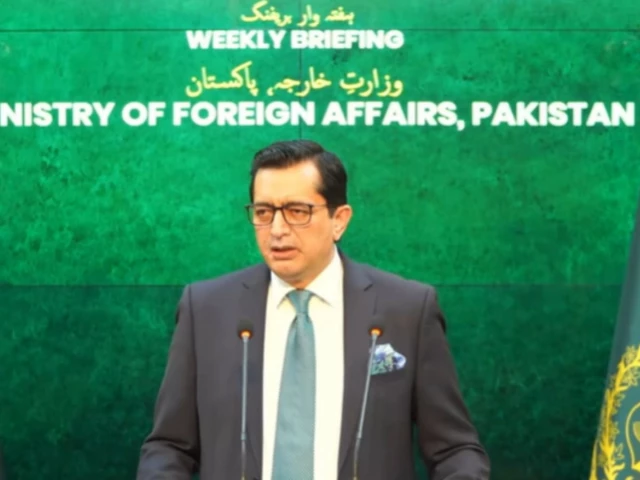
Ministry of Foreign Affairs’ spokesperson delivering the weekly briefing in Islamabad on November 6, 2026. Photo: Screengrab
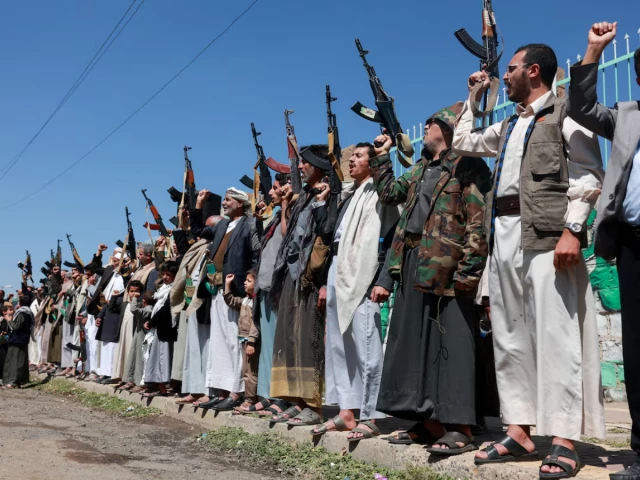
Pakistan on Friday strongly condemned Houthi ballistic missile attacks targeting Saudi Arabia, particularly the Makkah and Madinah regions, describing the strikes as a violation of the kingdom’s sovereignty and reaffirming its “unwavering solidarity” with Riyadh.
During the Foreign Office’s weekly press briefing, spokesperson Tahir Andrabi said Pakistan had condemned the October 26 attacks and reiterated its commitment to the Makkah Alliance for Defence.
He described the strikes as a “blatant disregard for the sanctity of Islam’s holiest sites and civilian safety”, reaffirming Pakistan’s support for protecting the two holy mosques against external aggression and threats.
The condemnation came amid a series of diplomatic engagements by Pakistan and its regional partners aimed at addressing tensions in the Middle East and promoting peace and stability.
On October 23, the foreign ministers of Pakistan, Turkiye, Egypt and Saudi Arabia met in Istanbul for the R4 ministerial meeting, where they discussed developments in the Middle East, including Palestine, Yemen, the conflict involving the United States, Israel and Iran, and tensions surrounding the Strait of Hormuz.
According to the Foreign Office spokesperson, the ministers reaffirmed their support for the Palestinian people’s legitimate rights, including self-determination and the establishment of an independent, sovereign and contiguous Palestinian state along the June 4, 1967 lines, with East Jerusalem as its capital.
They also called for an immediate end to violence, unhindered humanitarian assistance to Gaza and the early implementation of the two-state solution.
On Yemen, the four ministers condemned Houthi attacks against Saudi Arabia and commercial shipping in the Red Sea and Bab al-Mandab, while expressing solidarity with the Yemeni government and Saudi Arabia.
🔴LIVE: Spokesperson’s Weekly Press Briefing 06-11-2026 at Ministry of Foreign Affairs, Islamabad https://t.co/3QBo3AGmz3
— Ministry of Foreign Affairs – Pakistan (@ForeignOfficePk) November 6, 2026
They stressed that regional conflicts should be resolved through dialogue and diplomacy, welcomed ongoing diplomatic efforts, including the Islamabad MOU, and called for the safe and unimpeded resumption of navigation through the Strait of Hormuz, the spokesperson said.
In a related engagement on October 23, the R4 foreign ministers also met their counterparts from France, Germany, Italy and the United Kingdom in Istanbul to exchange views on regional and international challenges.
According to the Foreign Office, discussions covered the conflict involving the United States, Israel and Iran, the Israel-Palestine situation, Houthi attacks against Saudi Arabia and Yemen, and maritime security in the Strait of Hormuz, Bab al-Mandeb and the Black Sea.
The ministers reiterated their commitment to dialogue, de-escalation and negotiated solutions, and agreed to continue consultations to advance regional peace and stability, the FO said.
Separately, Pakistan condemned a terrorist attack during a funeral procession at a church in Jordan on October 24, expressing condolences to the Jordanian government and people, particularly the bereaved families, and wishing those injured a speedy recovery.
Islamabad also reaffirmed its solidarity with Jordan in the fight against terrorism.
Meanwhile, on October 28, the Makkah Alliance for Defence’s Secretary General, Lieutenant General Noman Mahmood, called on Deputy Prime Minister and Foreign Minister Ishaq Dar at the Foreign Office.
During the meeting, Dar highlighted Pakistan’s efforts to promote regional and international peace and stability and underscored the importance of the Makkah Alliance in advancing lasting peace in the region.
Pakistan steps up bilateral engagements
The FO spokesperson said Pakistan intensified its diplomatic engagements with key international partners, with a series of high-level visits and meetings focusing on trade, investment, regional security and strategic cooperation.
Among the key engagements was the official visit of Singapore’s Minister for Foreign Affairs, Dr Vivian Balakrishnan, who arrived in Islamabad on October 30 at the invitation of FM Dar.
Read more: Trump, Qatar’s emir discuss mediation efforts to end regional crisis
The visit coincided with the 60th anniversary of diplomatic relations between Pakistan and Singapore and came ahead of Singapore assuming the ASEAN chairmanship in 2027.
During the discussions, both sides explored opportunities to expand cooperation in trade and investment, particularly in agriculture, infrastructure development, digital technologies, fintech and services. The two countries also discussed collaboration in cybersecurity, climate resilience, capacity building, vocational training, skills development and people-to-people exchanges.
A key outcome of the visit was the exchange of a memorandum of understanding on cooperation in disaster management.
Sino-Pak friendship
The spokesperson also said that Pakistan and China reaffirmed their longstanding strategic partnership during the first official visit of Liu Haixing, Minister of the International Department of the Communist Party of China’s Central Committee, to Islamabad on November 1.
On November 2, FM Dar and Minister Haixing co-chaired a symposium on Xi Jinping’s thought on party building and a seminar on Pakistan-China governance. Addressing the gathering, Dar highlighted the role of political parties in governance and national development, the broad political consensus underpinning Pakistan-China friendship and the importance of strengthening party-to-party exchanges.
In his keynote address, Haixing appreciated Pakistan’s efforts to promote engagement between political parties.
The visit underscored the importance both countries attach to sustained political exchanges.
Earlier on October 25, the Chinese ambassador to Pakistan called on Dar to discuss bilateral cooperation, including the China-Pakistan Economic Corridor (CPEC), trade, investment and regional developments.
Both sides reaffirmed their commitment to strengthening the Pakistan-China relationship and promoting regional peace and stability.
A day later, Pakistan and China held the third round of the Pak-China Spokespersons’ Dialogue in Islamabad, focusing on strengthening cooperation in media engagement, strategic communication and public diplomacy.
Chinese Foreign Ministry Spokesperson Mao Ning also called on FM Dar during the visit. The deputy prime minister reaffirmed Pakistan’s commitment to further strengthening bilateral ties.
Pakistan, UK discuss security cooperation
Separately, FM Dar received British Minister of State for Security Dan Jarvis in Islamabad on November 5. The two sides discussed bilateral cooperation, regional developments and the R4 plus E4 framework.
Dar highlighted the threat of terrorism emanating from Afghanistan and called for concerted international efforts to counter the menace.
Engagement with ASEAN, EU and Arab countries
Pakistan’s diplomatic outreach also continued through a series of meetings held by the foreign secretary with diplomatic representatives based in Islamabad.
On October 23, the foreign secretary met ambassadors of ASEAN member states and reaffirmed Pakistan’s commitment to deepening cooperation with the regional bloc.
On October 27, he held discussions with ambassadors of the European Union and its member states on strengthening the longstanding Pakistan-EU partnership.
He also met ambassadors of the Arab Group on October 30, exchanging views on further strengthening Pakistan’s fraternal relations with Arab countries.
During the same period, the foreign secretary held separate meetings with the ambassadors of Saudi Arabia, Japan and Ukraine, as well as the British High Commissioner, to review bilateral relations and discuss regional and international developments.
Meanwhile, the deputy prime minister and foreign minister continued diplomatic consultations with counterparts from friendly countries.
On October 26, Dar communicated with the Bahraini Foreign Minister Dr Abdul Latif bin Rashid Al Zayani, on the telephone. The two foreign ministers discussed bilateral relations, cooperation at multilateral forums and regional developments, agreeing to maintain close coordination.
The series of engagements reflects Pakistan’s continued efforts to expand its diplomatic outreach, strengthen economic partnerships and enhance cooperation with regional and international partners on shared security and development priorities.
Two days later, FM Dar held separate telephone conversations with the foreign ministers of Oman and Tajikistan. Discussions focused on strengthening bilateral relations, maintaining high-level exchanges, regional developments and expanding mutually beneficial cooperation.
On November 1, he spoke separately with the foreign ministers of the Maldives and Uzbekistan.
During his conversation with the Maldivian foreign minister, both sides discussed building on the understandings reached during the recent visit and advancing bilateral cooperation.
With his Uzbek counterpart, Dar discussed preparations for the upcoming 2027 Shanghai Cooperation Organisation (SCO) Council of Heads of State Summit, the organisation’s calendar of activities and regional developments.
On November 4, Dar spoke with the Saudi foreign minister. The two leaders exchanged views on regional and international developments, underscoring the importance of continued dialogue, diplomacy and engagement for regional peace and stability.
On the same day, Iranian Ambassador Reza Amiri Moghadam called on the deputy prime minister at the Foreign Office. The two sides discussed bilateral relations and matters of mutual interest, with Dar reaffirming Pakistan’s commitment to further strengthening its close and friendly ties with Iran.
Regional developments also came under discussion, with the foreign minister emphasising the importance of dialogue and diplomacy in promoting peace and stability.
On November 5, Dar conducted separate telephone conversations with the foreign ministers of Oman and Iran.
Discussions centred on strengthening bilateral relations and reviewing recent regional and international developments. The FM once again stressed the importance of sustained dialogue and diplomatic engagement to address outstanding issues and promote lasting peace, security and stability in the region.
This story is being updated.