The two hold detailed consultations on national political matters and steps to improve the economy
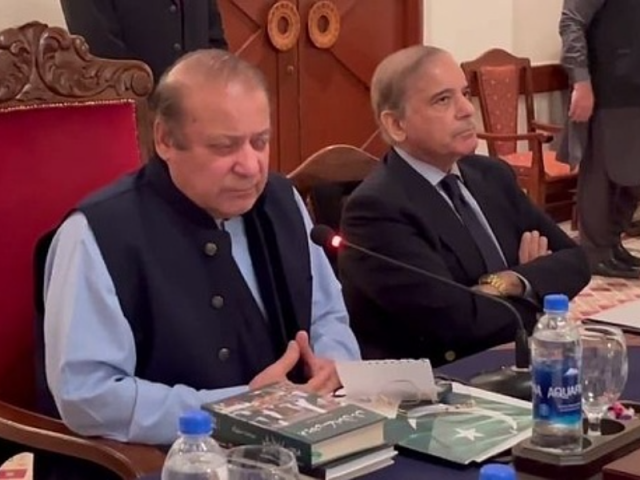
Former prime minister Nawaz Sharif addressing the participants during a meeting with various leaders of Balochistan on November 14, 2023. SCREENGRAB
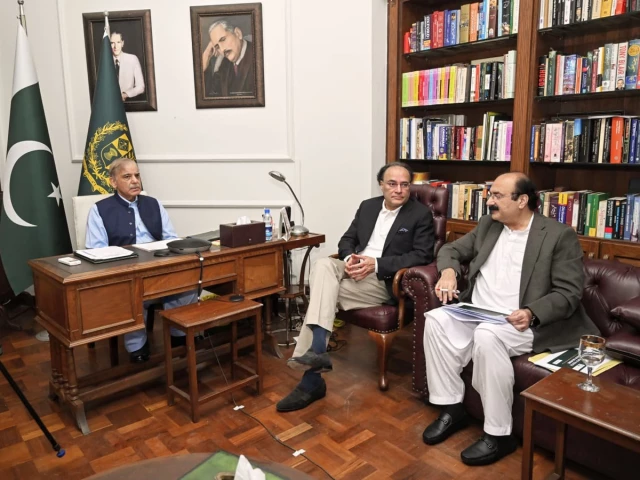
Prime Minister Shehbaz Sharif met Pakistan Muslim League-Nawaz (PML-N) leader Nawaz Sharif in Lahore on Sunday and briefed him on the security situation in Khyber-Pakhtunkhwa (K-P), the country’s economic challenges and the government’s ongoing reform agenda, the Prime Minister’s Office (PMO) said.
According to the PMO, the meeting took place at Jati Umra, where Nawaz was briefed on the government’s ongoing reforms, particularly economic reforms, the challenges facing the country and measures being taken to address them.
The two leaders held detailed consultations on national political matters and steps to improve the economy, according to the PMO.
Deputy Prime Minister and Foreign Minister Ishaq Dar and Punjab Chief Minister Maryam Nawaz also attended the meeting.
وزیرِ اعظم محمد شہباز شریف کی جاتی امراء آمد، مسلم لیگ ن کے قائد میاں محمد نواز شریف سے ملاقات ہوئی. وزیرِ اعظم کی میاں محمد نواز شریف سے ملکی سیاسی صورتحال اور مختلف امور کے حوالے سے بات چیت ہوئی.
وزیرِ اعظم نے میاں محمد نواز شریف کو خیبرپختونخوا میں امن و امان کی صورتحال کے…
— Prime Minister’s Office (@PakPMO) November 8, 2026
The meeting took place as consumers faced another increase in electricity prices. The National Electric Power Regulatory Authority (NEPRA) notified a Rs2.36 per-unit increase on Saturday under the monthly fuel cost adjustment for September.
The higher electricity costs came amid expensive LNG imports and uncertainty over supplies. Pakistan was expected to spend about $1.29 billion on 22 LNG cargoes between November 2026 and February 2027, including 10 spot-market cargoes estimated to cost $863 million.
The Power Division also warned that fuel price adjustments could rise two to three times between December and February as international LNG and coal prices increased and hydropower generation declined during winter. The department cautioned that consumers could face a further financial burden, alongside increased power load management.
The meeting also followed the imposition of emergency and governor’s rule in K-P on October 11, after President Asif Ali Zardari approved the summary on PM Shehbaz’s advice under Articles 232 and 234 of the Constitution.
The federal government cited a deterioration in the law and order situation and a rise in terrorist attacks as grounds for the decision. Under the proclamation, the provincial chief minister, cabinet members, advisers and advocate general ceased to hold office, while the governor assumed powers assigned to him by the federal government.
Read: PHC strikes off petitions against governor’s rule
The measures also included the deployment of the Pakistan Army to assist the civil administration under Article 245 and the appointment of Dr Muhammad Fakhr Alam Irfan as the province’s chief secretary. An 11-member advisory council was formed to assist the governor, while a separate administrative arrangement was announced for 12 districts to be placed directly under the federation.
At a briefing in Peshawar on Saturday, Governor Faisal Karim Kundi said the provincial government had planned Rs70 billion for the police and Rs10.3 billion for the Counter Terrorism Department (CTD) during the current financial year.
Plans also include installing anti-drone systems in Dera Ismail Khan, Lakki Marwat and Bannu, as well as addressing vacant police posts and improving security infrastructure. Officials said the province faced a shortage of about 17,000 police personnel.
Despite continued intelligence-based operations (IBOs) by security forces, terrorist attacks across K-P have persisted, with police and security personnel increasingly coming under fire. Terrorist incidents in the province rose by 195 per cent between March 2024 and September 2026, according to security reports presented to the federal cabinet. The reports also recorded 170 drone attacks against police and security forces in 2026, compared with none in 2024.