TAXILA:
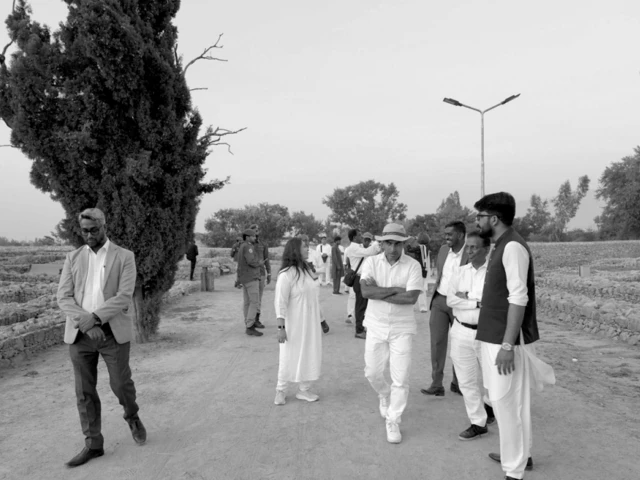
A high-level delegation from Sri Lanka visited the Taxila Museum to explore Buddhist heritage.
Deputy Director SRO Taxila Muhammad Asim Dogar and Assistant Curator of the Taxila Museum Nauman Akhtar welcomed the visitors and briefed them on the historical, religious and cultural heritage of the Gandhara civilisation.
The delegation included Sri Lanka’s Director General of Archaeology and professors from various universities.
During the visit, members of the delegation performed religious rituals before the sacred Buddha Tooth Relic and expressed their reverence. They also viewed the Gandhara art artefacts preserved at the museum, including Buddhist sculptures, stone carvings and remains of ancient civilisations.
The delegation was briefed on the historical significance of Taxila, the spread of Buddhism in the ancient Gandhara civilisation and the region’s academic and cultural role.
For centuries, Taxila remained an important centre of religious, academic and cultural activities, where the fusion of different civilisations and artistic traditions gave rise to the distinctive Gandhara art style.
On the occasion, delegation members appreciated the efforts of Director General of Archaeology Punjab Zaheer Abbas Malik and the Punjab government, saying that initiatives to highlight the Gandhara civilisation and Buddhist historical heritage at the international level were commendable.
They also expressed satisfaction with the arrangements made for their reception, briefing and visit to the Taxila Museum, describing the visit as a positive step towards promoting cultural and historical ties between Pakistan and Sri Lanka.
The historical sites of Taxila, including the Dharmarajika Stupa, Jaulian and the ancient monasteries of Mohra Moradu, remain prominent symbols of the historical presence and cultural flourishing of Buddhism in the region.
In Gandhara art, Buddhist religious concepts were given a distinctive identity in sculpture through a blend of local and Greek artistic influences, earning the style worldwide recognition.